SEO-HIRABAYASHI
FAMILIES FELLOWSHIP
I was awarded the Seo-Hirabayashi Families Fellowship in Fall 2025. Fellows spend the academic year developing a research or creative project related to WWII Japanese-American incarceration. Under the mentorship of Center for the American West faculty Thomas Andrews and Brooke Neely, as well as Art Practices professor Anna Tsouhlarakis, I developed a series of paintings contrasting the rhetoric of Japanese-American incarceration with imagery of the real situation.
All pieces are made of acrylic paint on cardboard and wood.
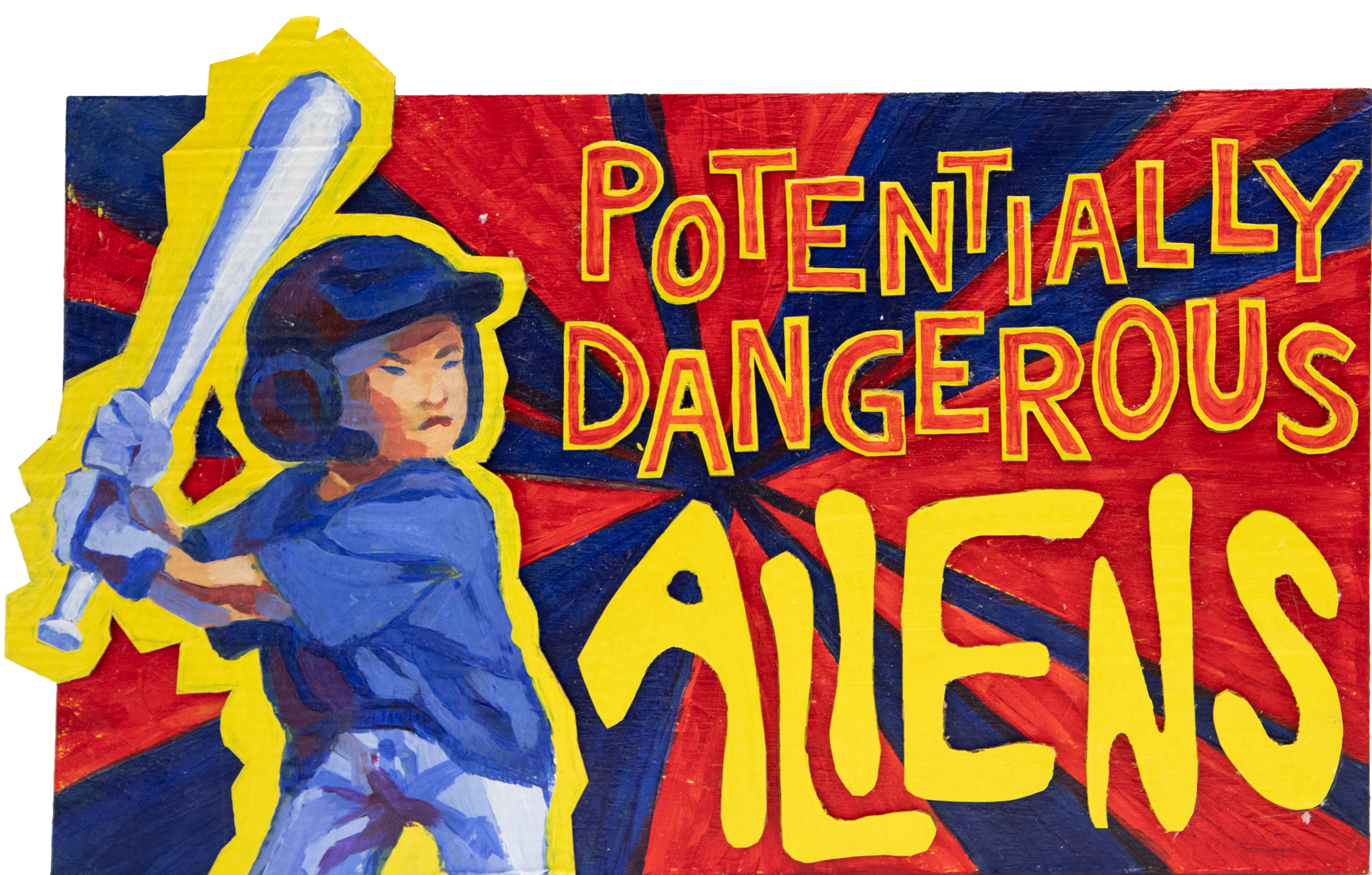
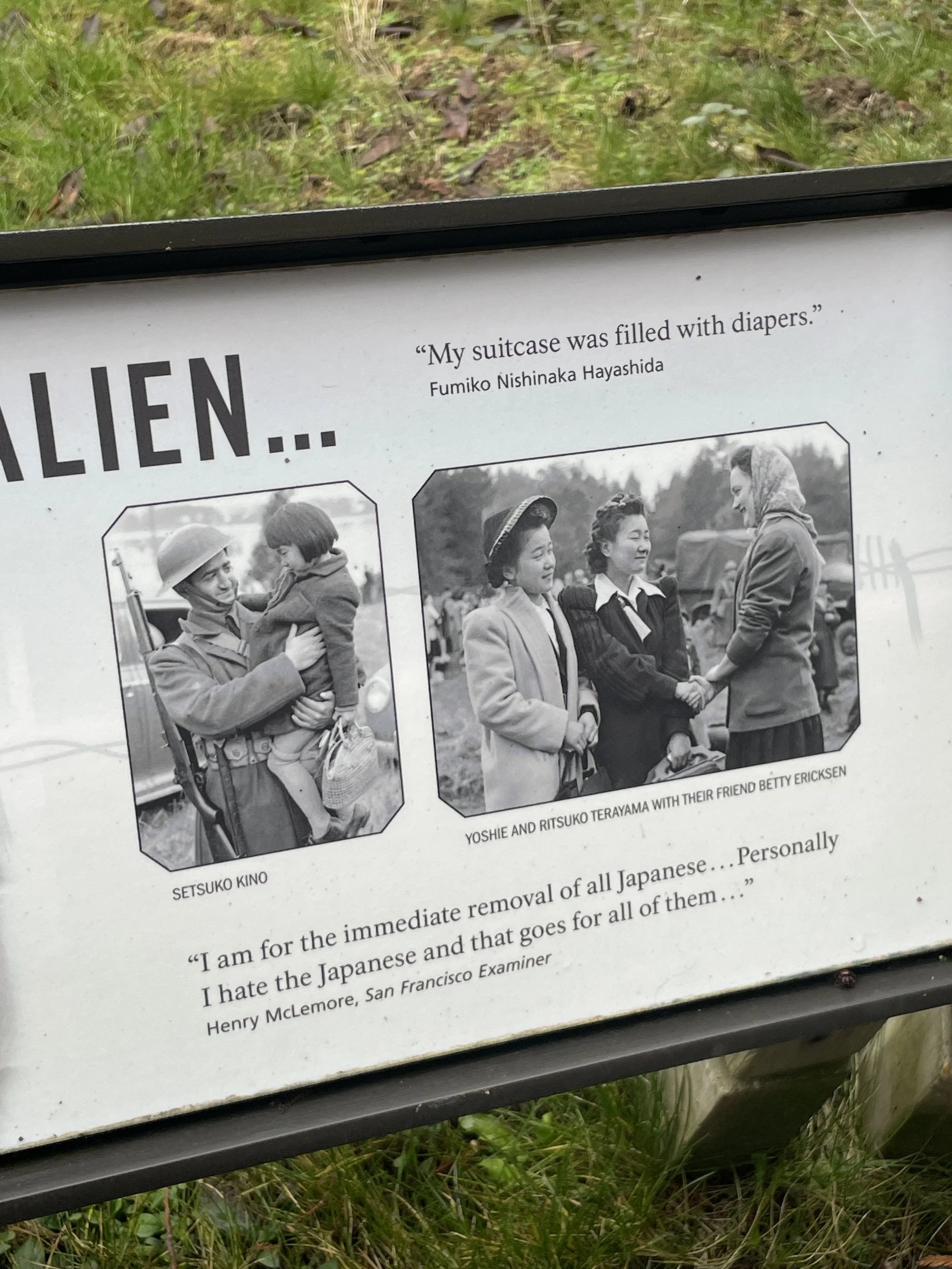
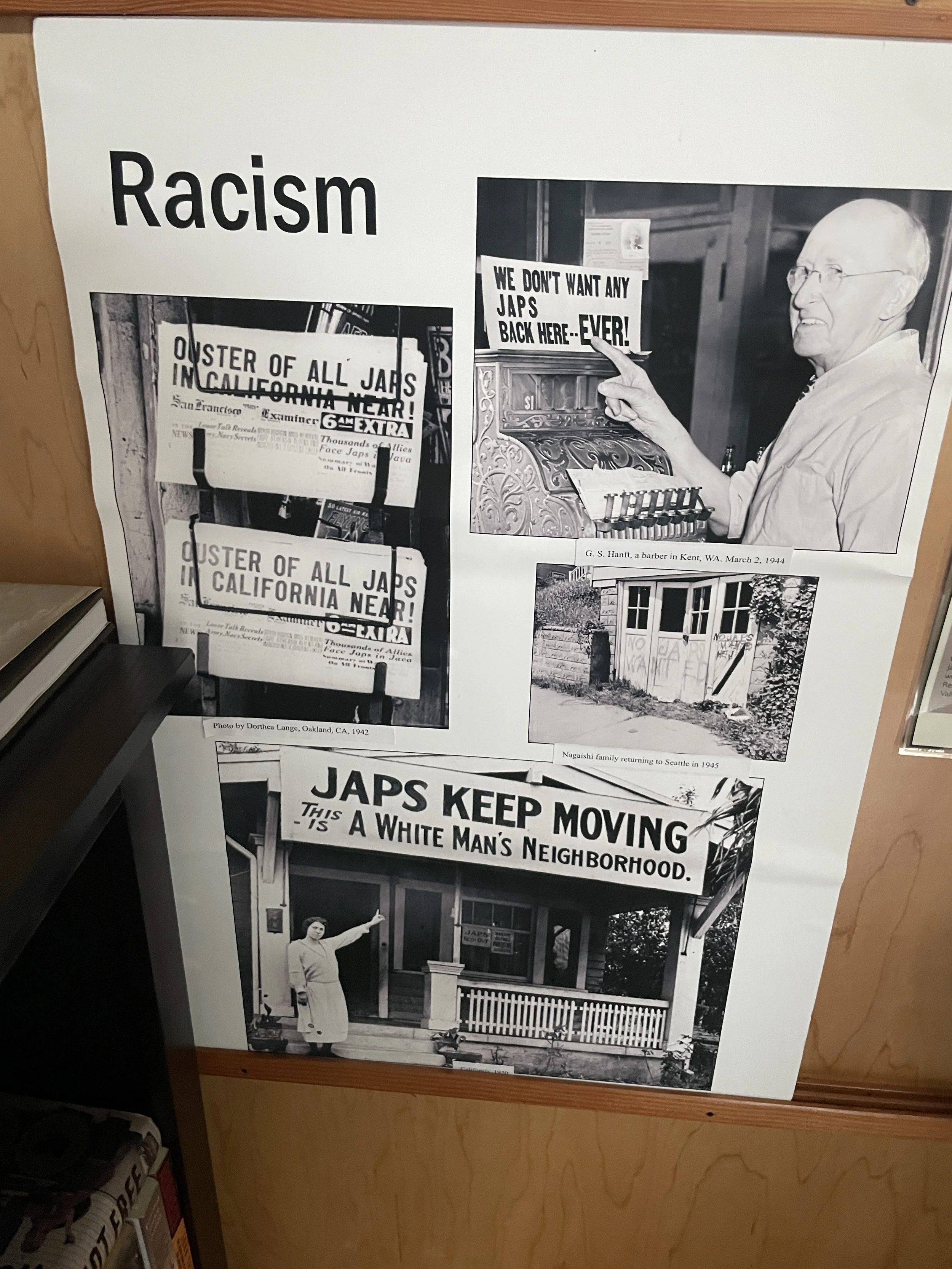
While not a direct quote, the notion of Japanese-Americans as “potentially dangerous aliens” is found throughout both propaganda and legal documentation, including Proclamation 2525 and Executive Order 9066. While emulating the intensity of wartime propaganda, I paired this message with the image of a little boy playing baseball, a sport deeply intertwined with Japanese-American identity, to highlight its absurdity.
“Potentially Dangerous Aliens”
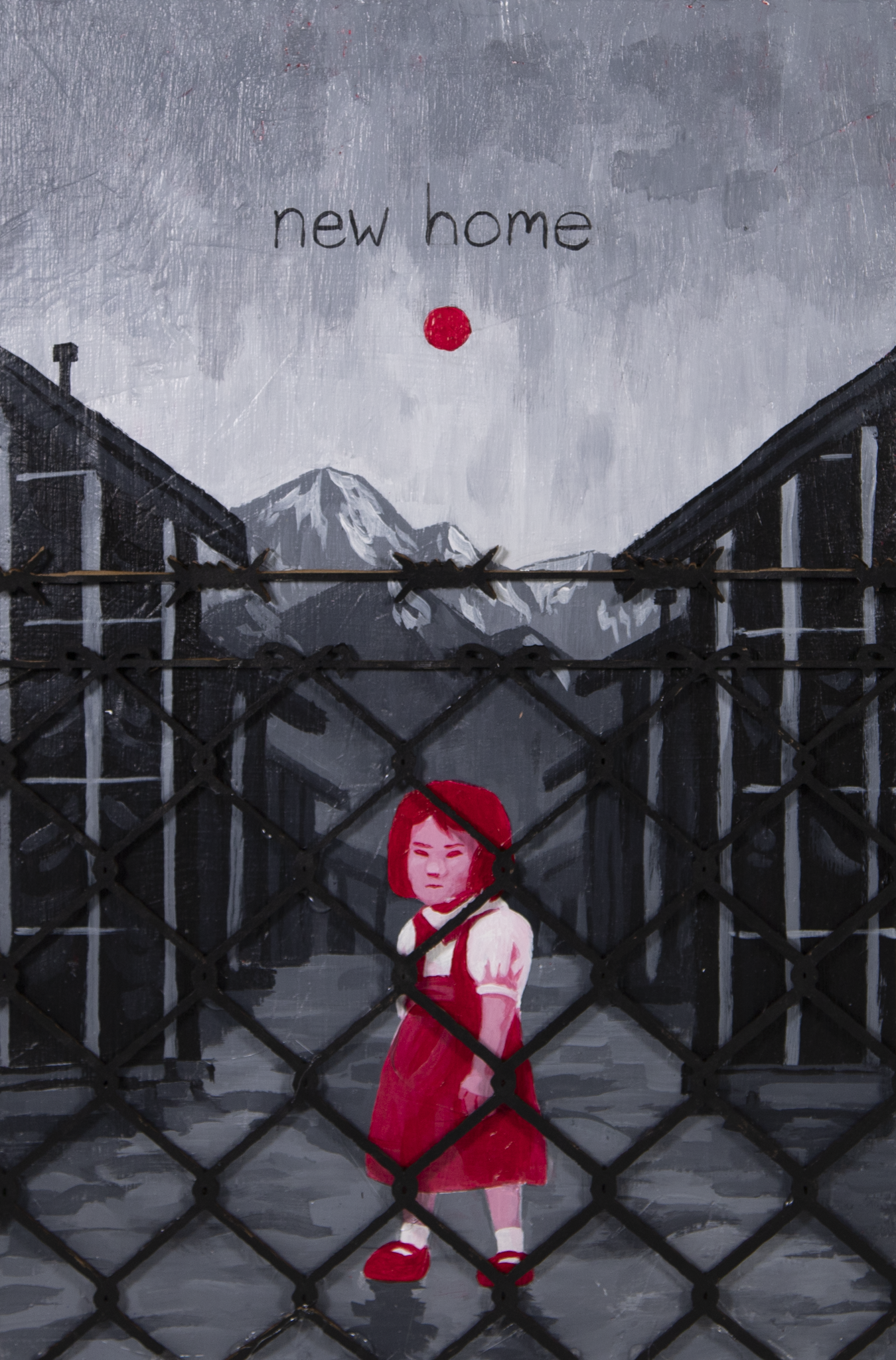
The US government employed countless euphemisms to describe incarceration camps, including “assembly centers” or “relocation centers”, with possibly the most egregious being “new homes”. In “New Home”, I depict a young Japanese girl trapped in an incarceration camp behind a barbed wire fence. The fence itself is made of laser-cut cardboard, extruding from the canvas to invoke a suffocating feeling. Red accents amidst an otherwise grayscale color scheme bring life to two key focal points: the girl in the midground, and the rising sun, an iconic Japanese symbol of hope.
“New Home”
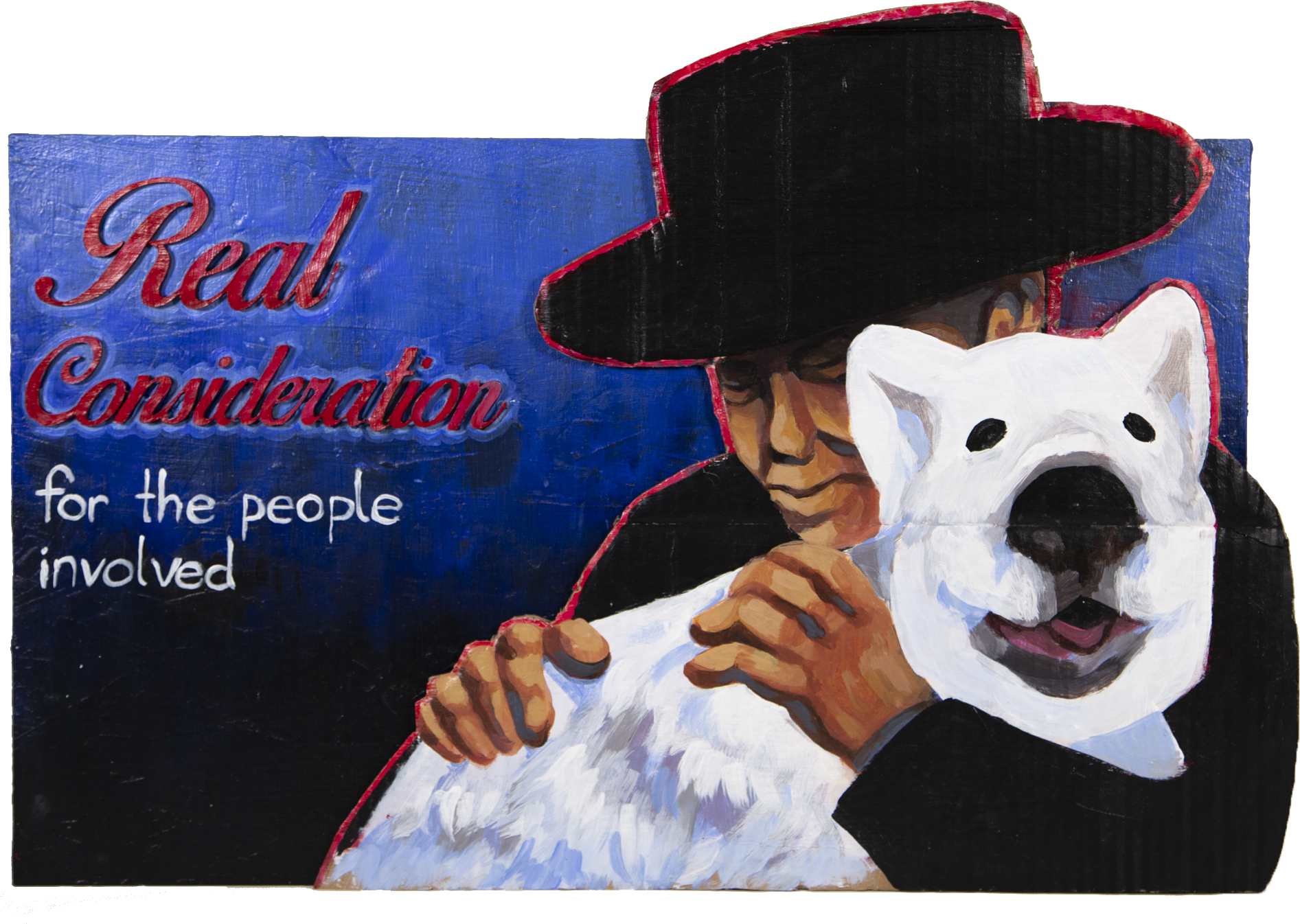
“Real Consideration”
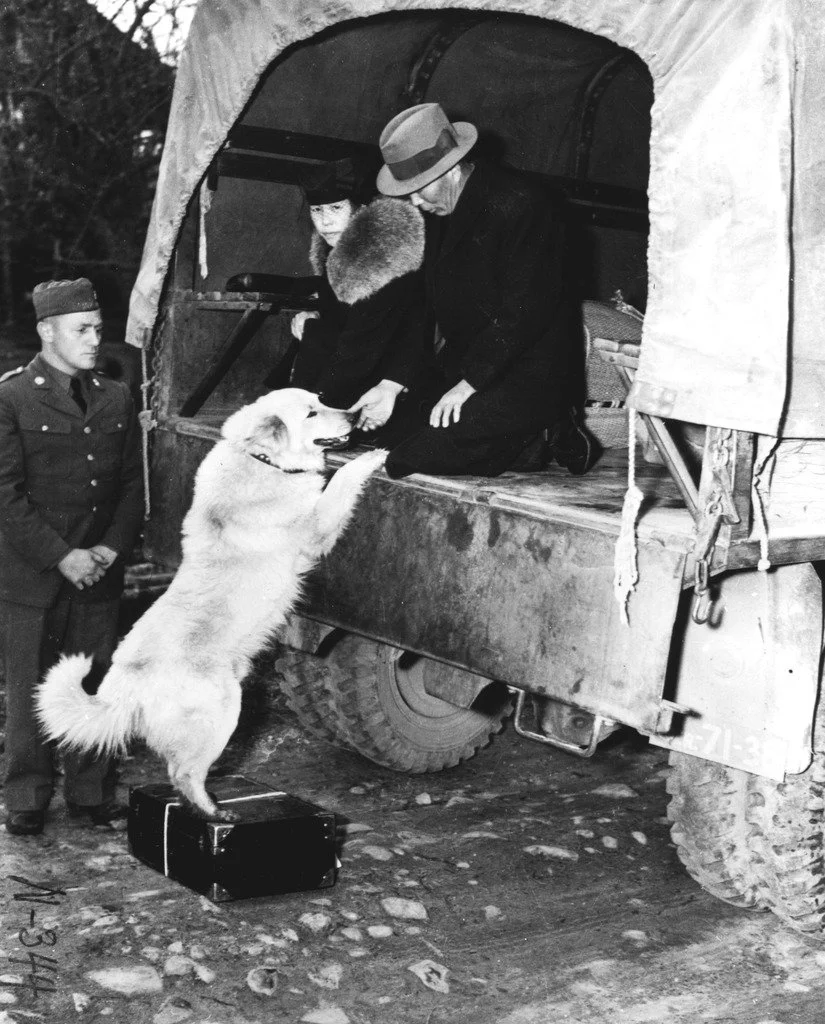
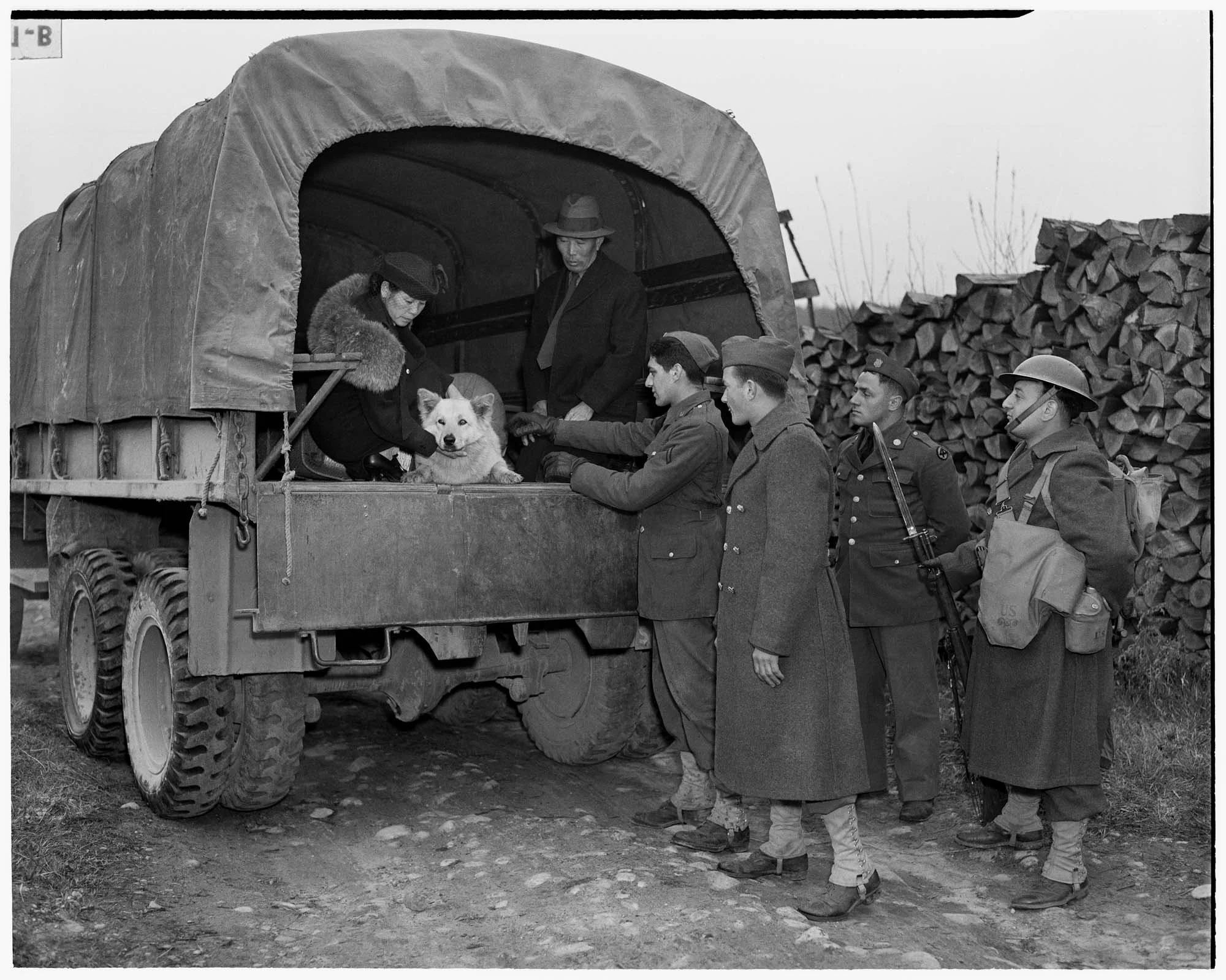
This quote is taken from the government-produced propaganda film “Japanese Relocation” (1943), which claimed that “military and the civilian agencies alike determined to do the job [of forced incarceration] as a democracy should - - with real consideration for the people involved.” In reality, Japanese-Americans were forced to leave behind precious belongings, including homes, businesses, and pets. In the case of the Moji family of Bainbridge Island, their husky, King, growled at soldiers and attempted to board the departing truck before Mrs. Moji could calm him down. While living with the Moji’s neighbors following their relocation, King refused to eat and passed away. The irony of the statement made in “Japanese Relocation” embodies a particular cruelty I call attention to through this piece.
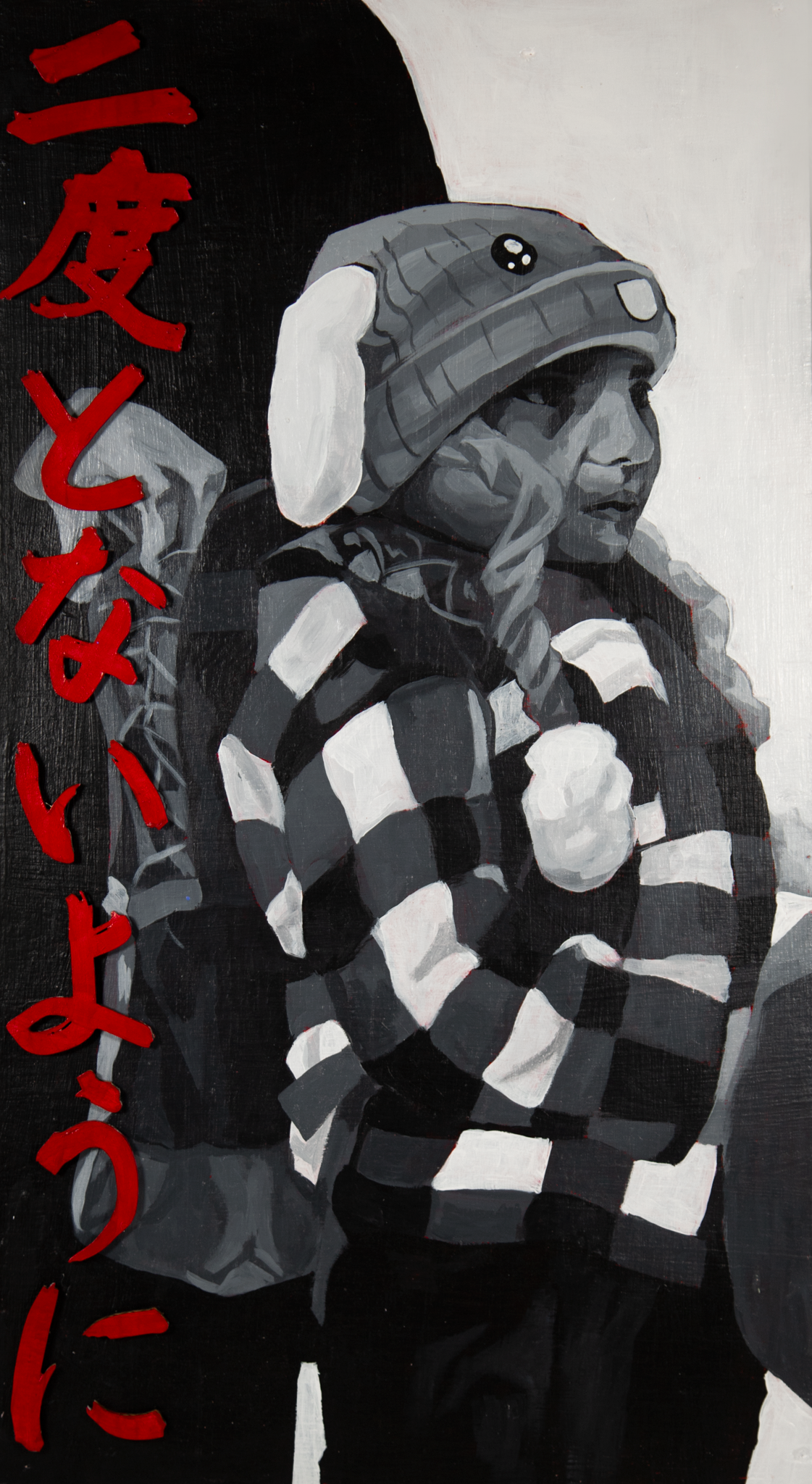
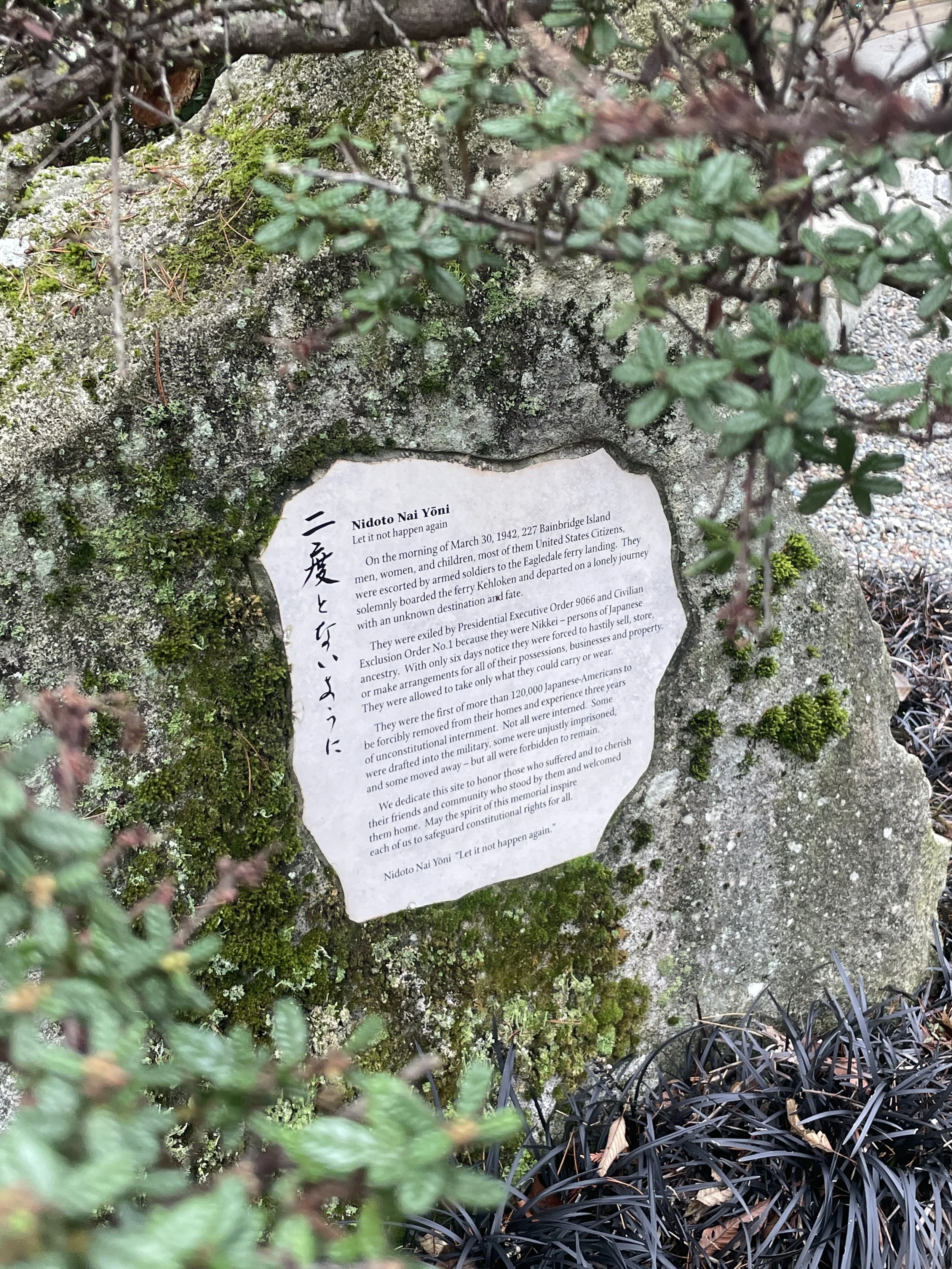
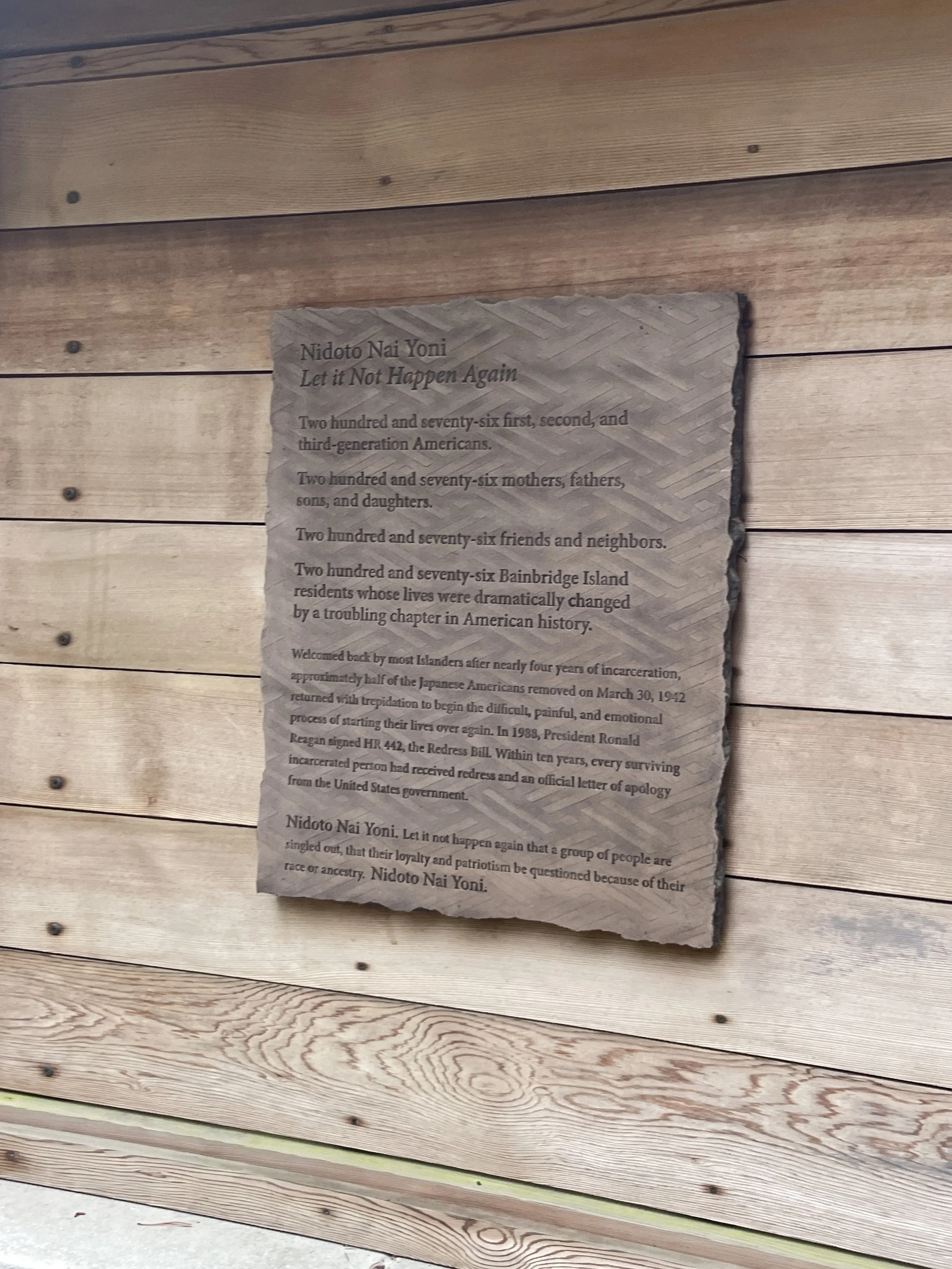
Nidoto Nai Yoni (二度とないように) , translating to “Let it Not Happen Again”, is the motto and mission of the Bainbridge Island Japanese American Exclusion Memorial. As the final piece in this series, “Nidoto Nai Yoni” carries the contradictory rhetoric and reality of Japanese-American incarceration through to the modern day, where racially-motivated unlawful detainment is still rampant in America. Despite our history, warnings, and supposed lessons learned, it is still, most certainly, happening again. For my image, I chose to depict Liam Ramos, a preschooler detained by ICE in January 2026 and a now-famous example of American injustice.
Nidoto Nai Yoni
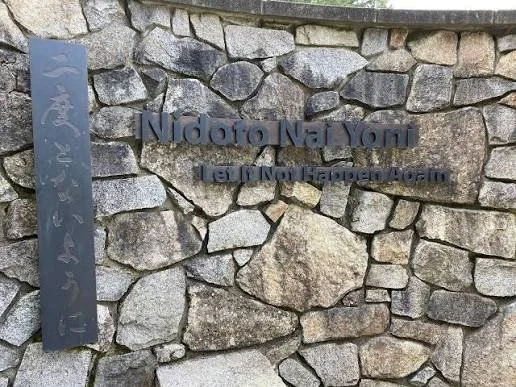
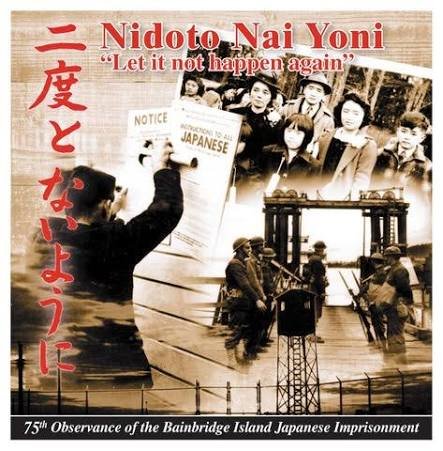
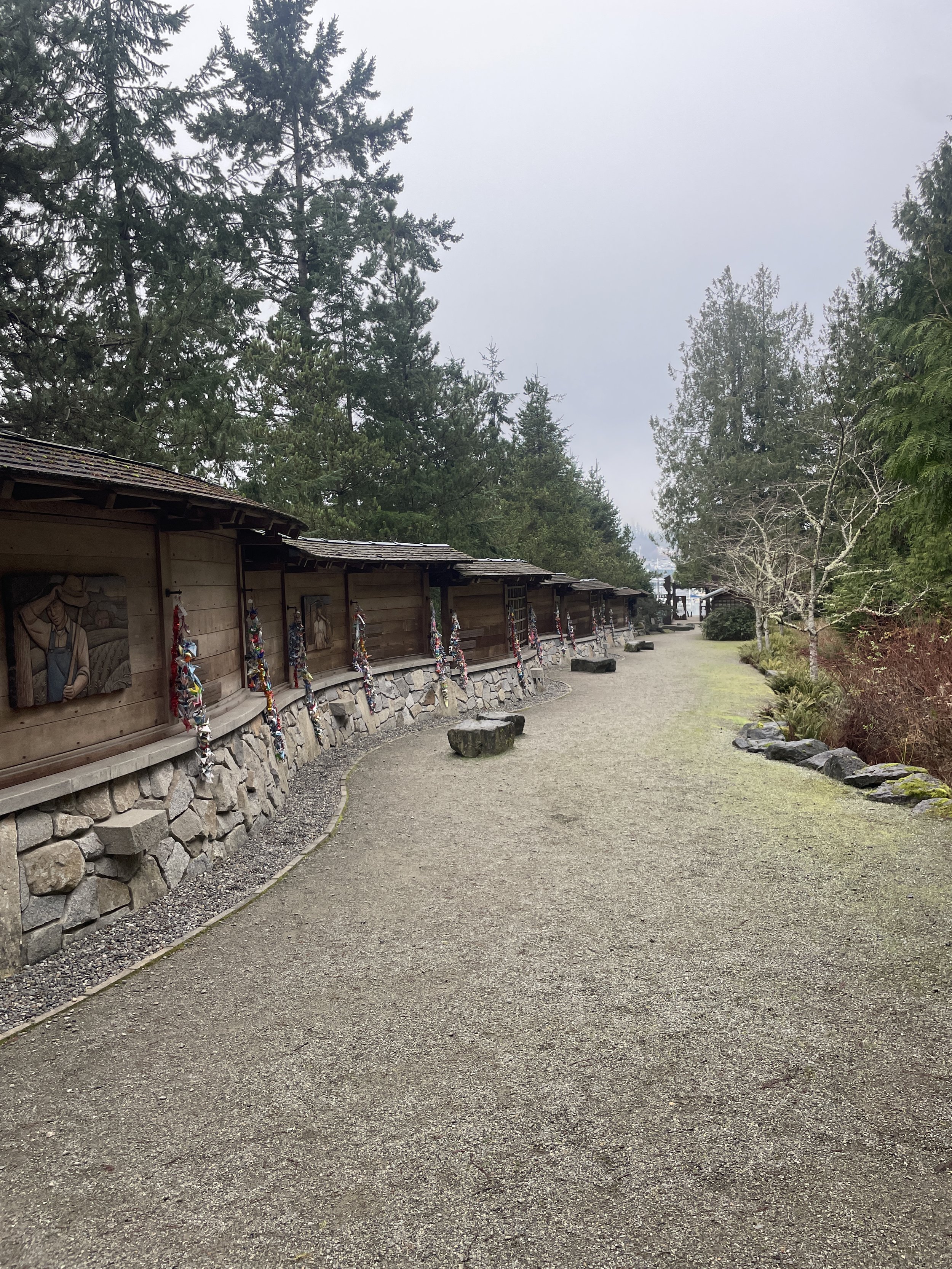
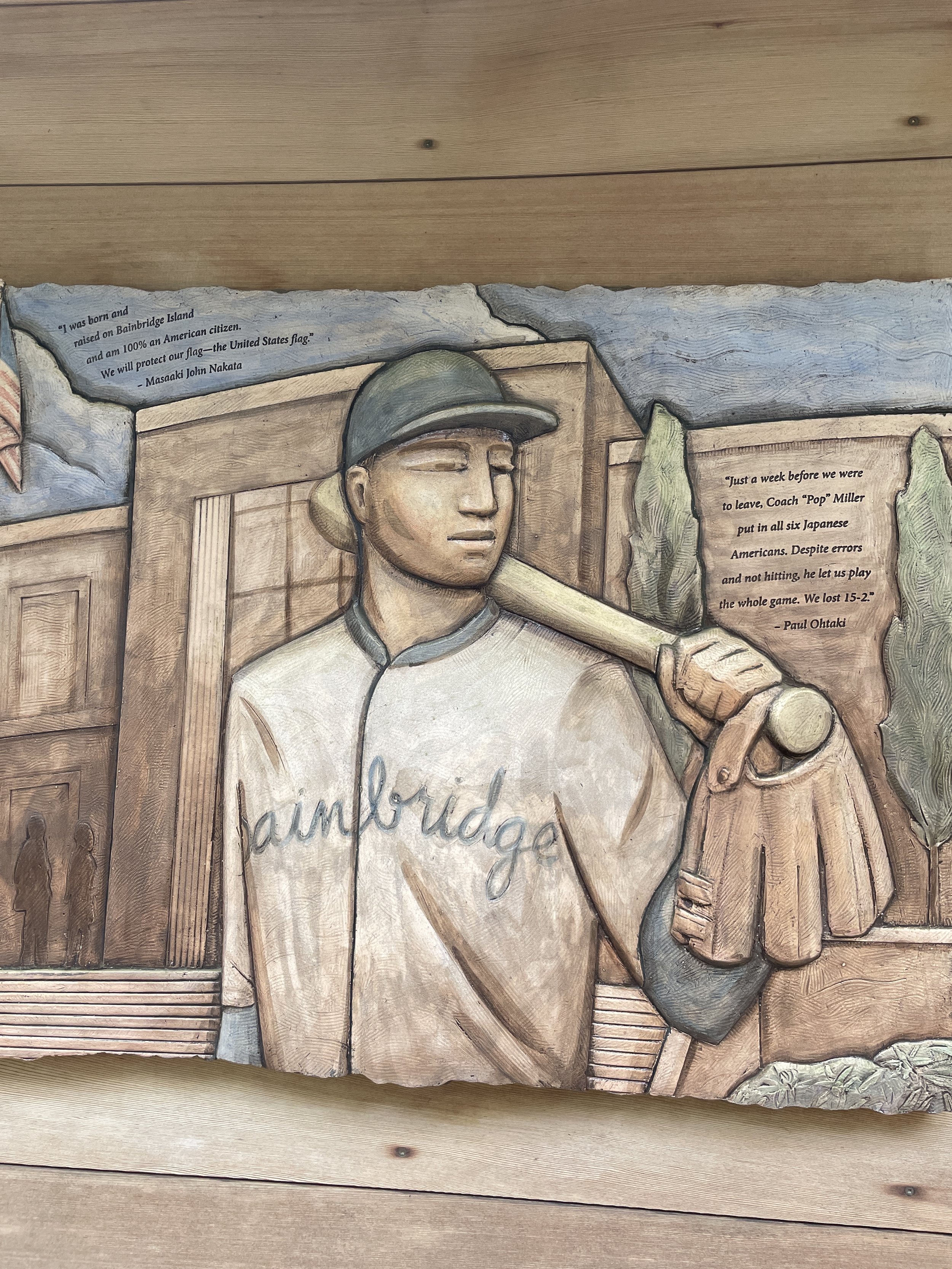
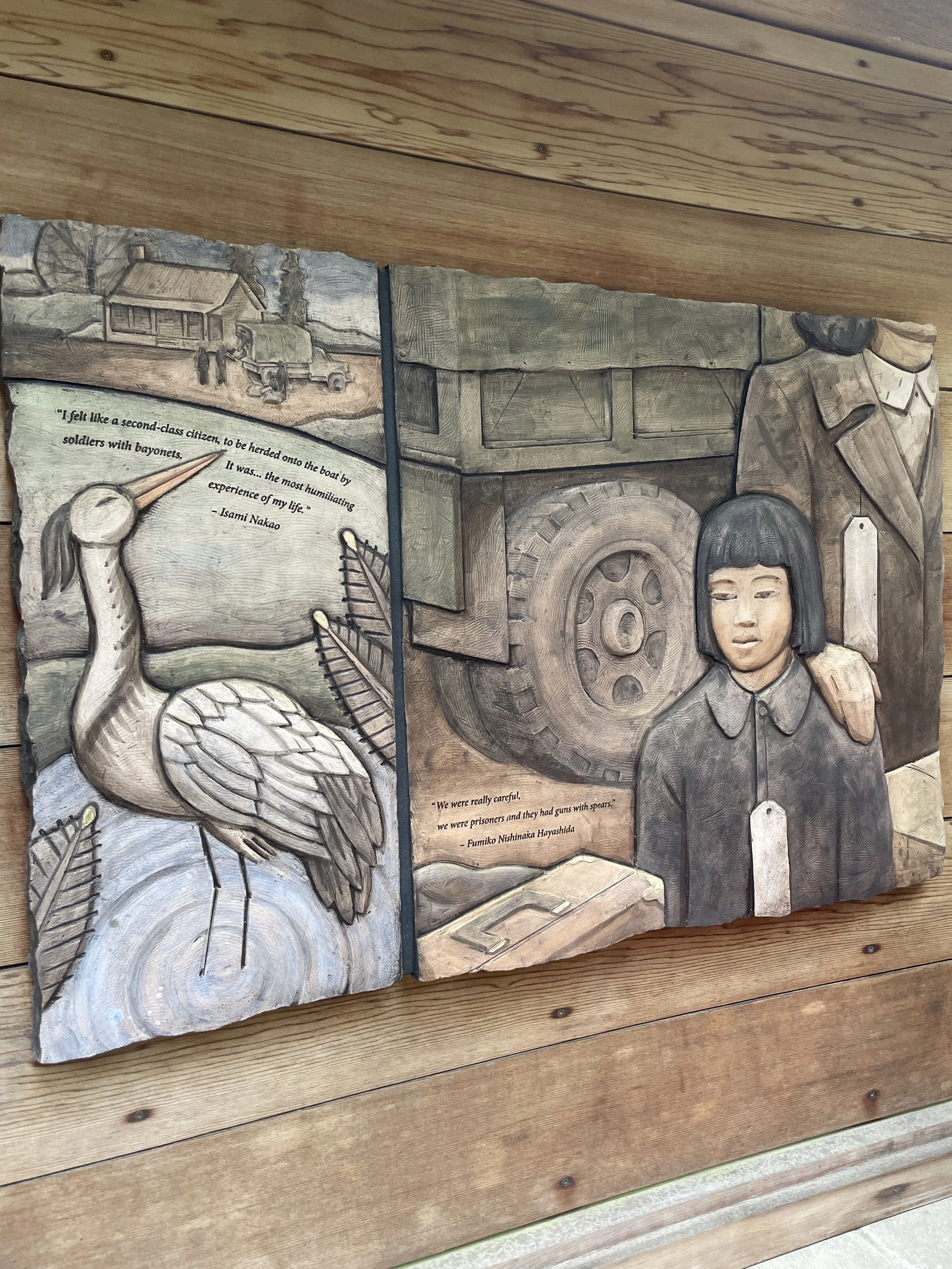
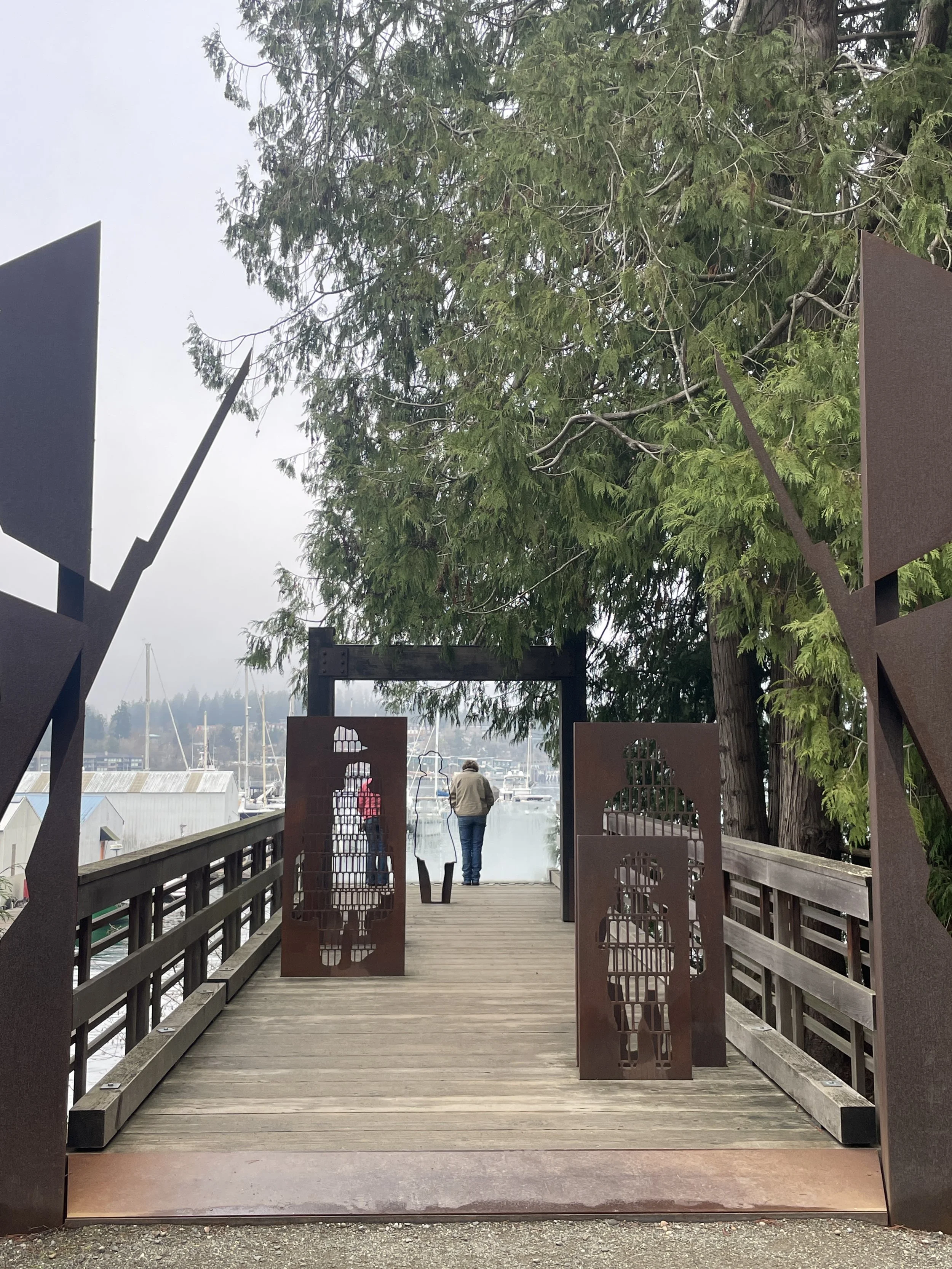
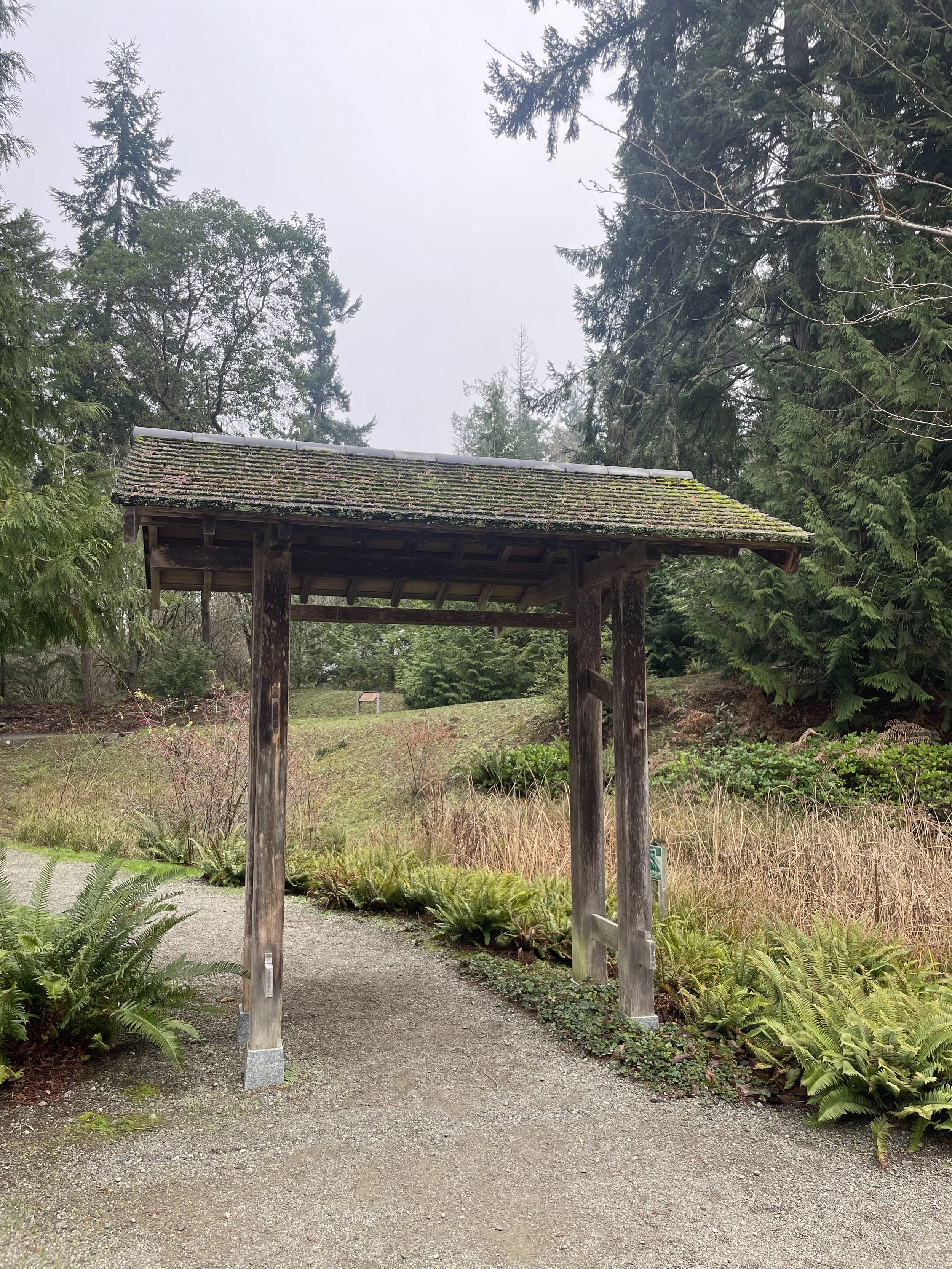
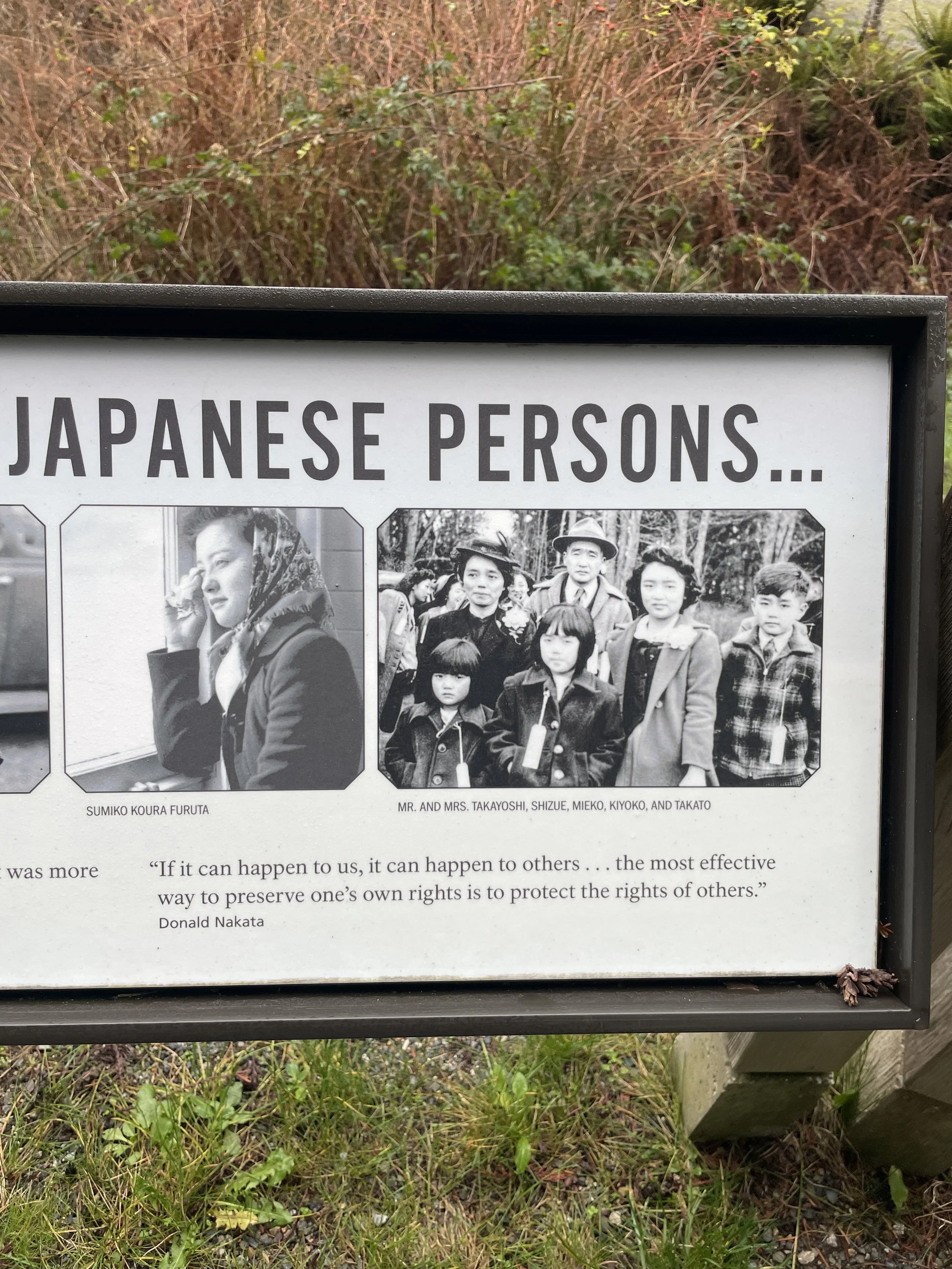
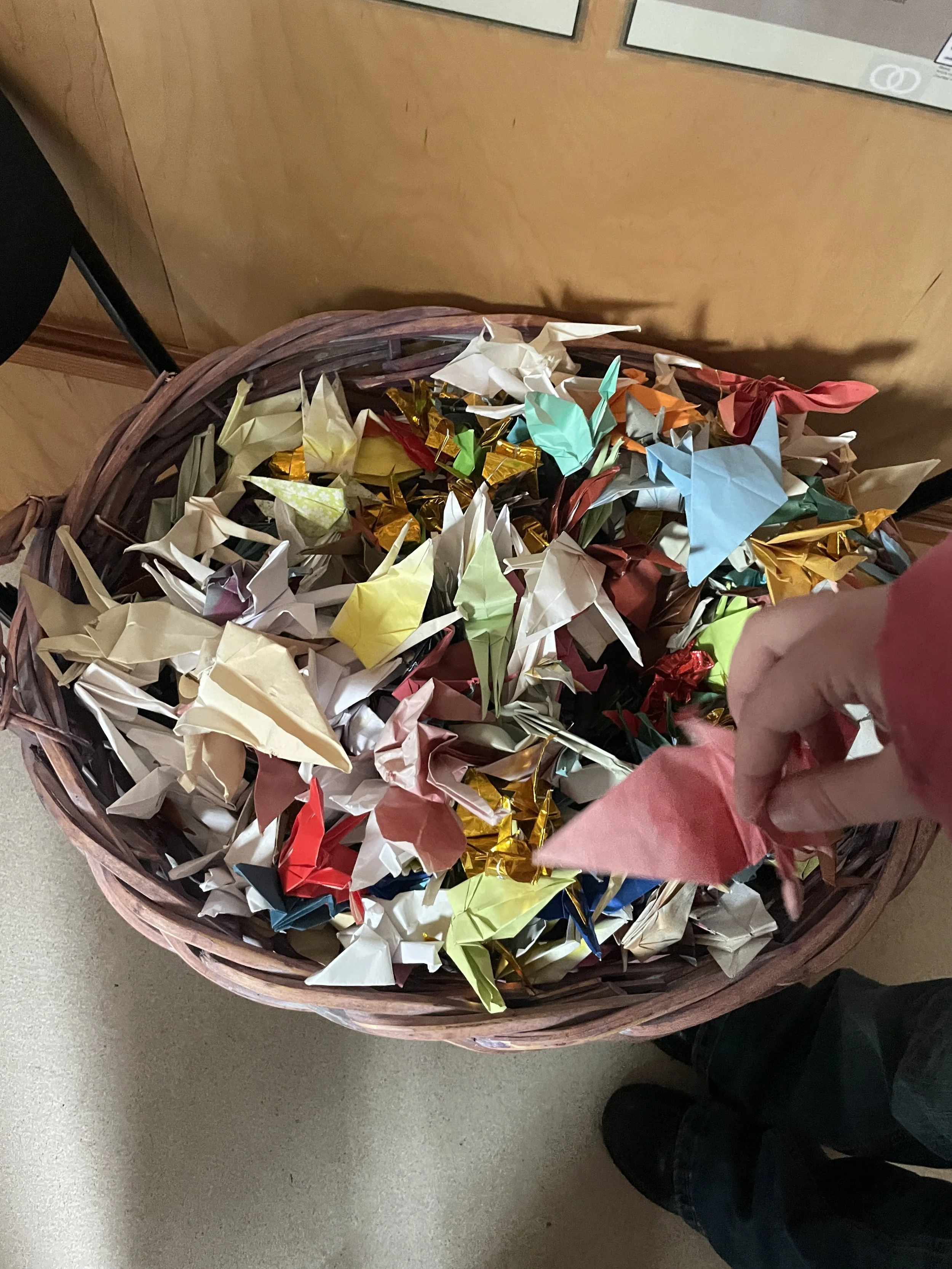
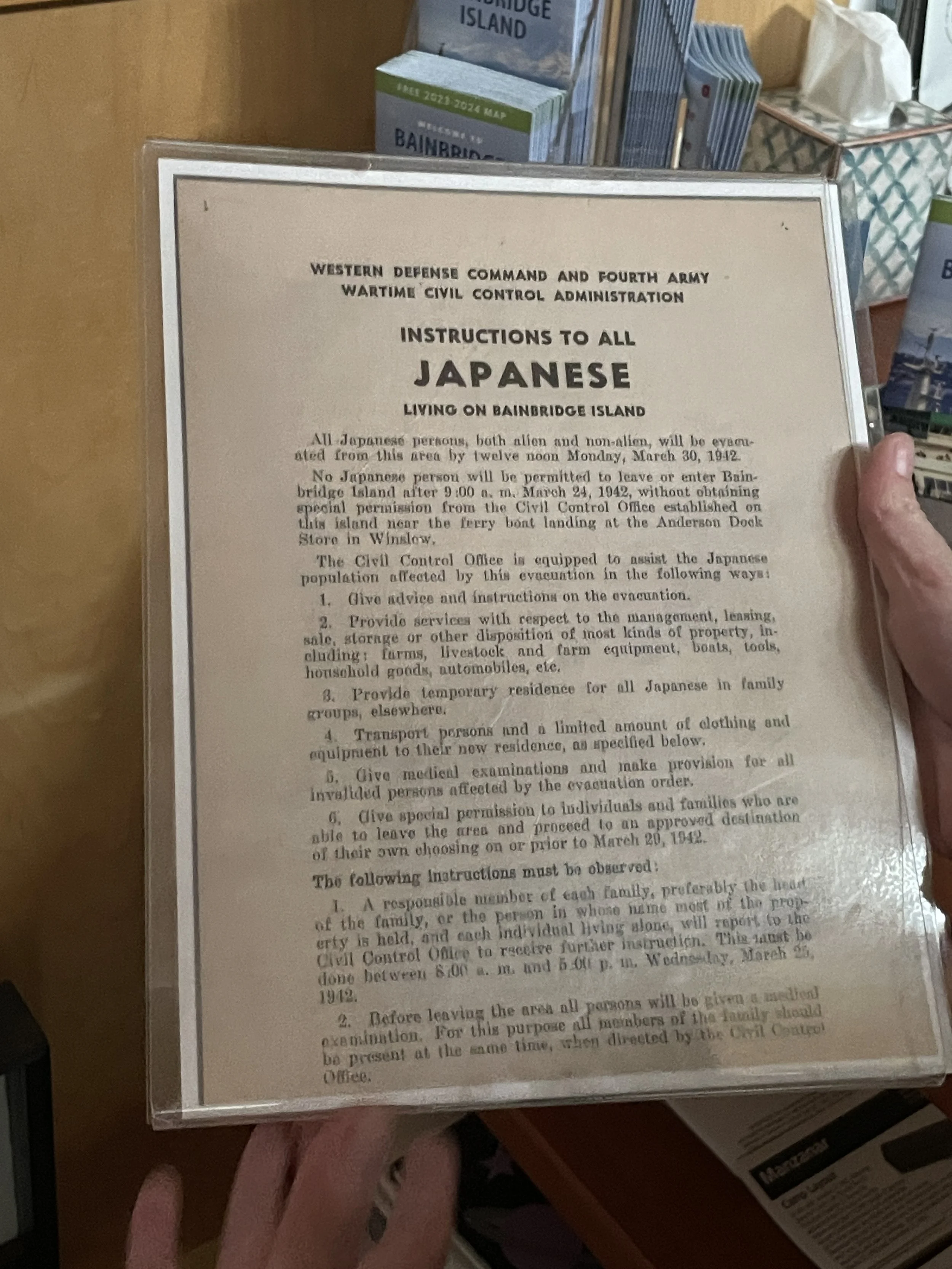
Most research for this project involved watching documentaries and reading memoirs from incarcerated Japanese-Americans. I met with the Seo-Hirabayashi fellow cohort monthly to discuss material and bounce off creative ideas. I also met individually with Anna Tsouhlarakis around once every two weeks for advise regarding execution of artistic ideas. In January 2026, I visited the Bainbridge Island Japanese American Exclusion Memorial to gain real-world inspiration for my work.
Field Research